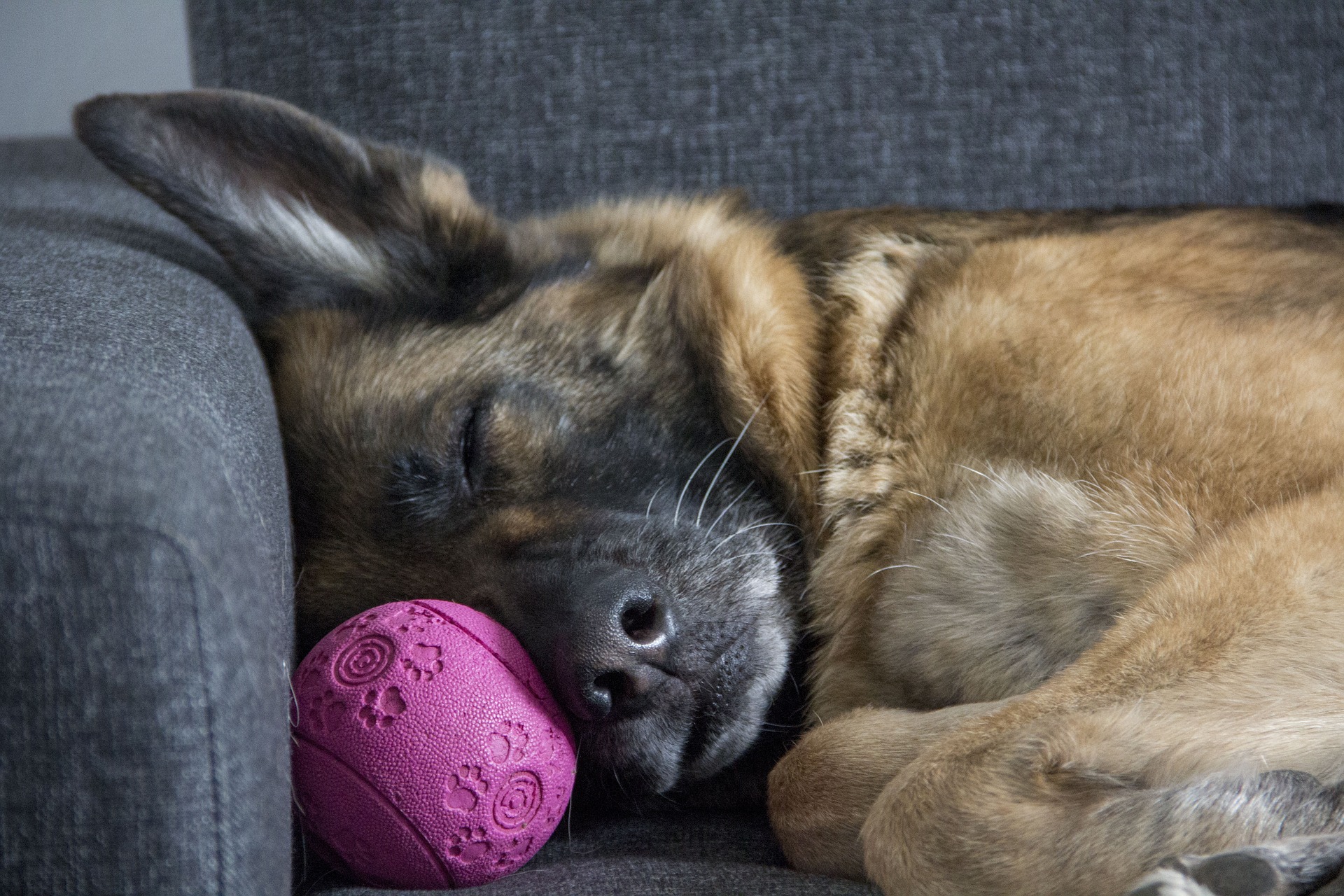
It is a daily observation that leaves many pet parents feeling slightly envious: you wake up in the morning, feed your dog, take them for a quick walk, and within minutes of sitting down at your desk, your dog is already curled up in their favorite dog bed fast asleep. They will snooze through the morning, take a brief break to look out the window at lunch, and then immediately head back to the couch for an afternoon nap. By the time evening arrives and you are ready to unwind, your dog is settled right back down for a full night of deep sleep.
Watching your pet sleep through most of the day can make you wonder if something is wrong with their health. You might worry that your dog is suffering from chronic boredom, a hidden illness, early depression, or that they are lacking vital physical energy.
Fortunately, heavy sleeping is a perfectly natural and healthy biological requirement for canines. Dogs possess completely different sleep patterns, digestive systems, and evolutionary wiring than humans. Their bodies require significant downtime to repair muscles, process daily memories, and regulate their immune systems. This guide breaks down the real biological reasons behind why dogs sleep so much, how age and breed size completely alter their daily rest requirements, and exactly how to tell the difference between a normal long nap and a true veterinary medical issue.
The Top 4 Reasons Why Your Dog Is Sleeping All Day
Veterinary neurologists and animal behaviorists identify several distinct evolutionary and physical factors that dictate a dog’s daily sleep schedule:
- Replicating Predator Patterns from Wild Ancestors: Before dogs became domesticated companions sleeping on plush beds, their wild ancestors had to hunt for every single meal. Hunting requires massive, explosive bursts of physical energy to chase down prey, followed by long periods of absolute rest to recover. Because dogs are predators and not prey animals, they do not need to stay awake to scan the horizon for danger. Their brains are hardwired to conserve energy whenever they are not actively eating or playing, allowing them to fall asleep instantly when nothing is happening.
- The Inefficiency of the Feline and Canine REM Cycle: Humans spend about 25 percent of their total sleep time in a deep, restorative state known as Rapid Eye Movement (REM) sleep, which allows us to wake up feeling fully refreshed after a solid 8 hours. Dogs, conversely, are flexible sleepers who enter and exit sleep phases very quickly. Because they wake up at the slightest sound or scent, they only spend about 10 percent of their sleep cycle in true REM sleep. To get the same amount of deep, restorative brain rest that a human gets in one night, a dog must spread their sleep out across 12 to 14 hours every single day.
- Rapid Growth Shifts in Puppies and Severe Senior Slowdowns: A dog’s age dictates their physical need for sleep. Young puppies are growing at an incredible rate, developing bones, muscles, and complex neural networks overnight. This rapid growth drains their bodies completely, requiring puppies to sleep up to 18 to 20 hours a day to develop safely. On the other end of the spectrum, senior dogs experience a natural slowdown in their metabolism and physical stamina. Their joints ache more easily, and they require much more rest to recover from a simple walk around the neighborhood.
- Breed Size and the Giant Metabolism Factor: In the canine world, size matters when it comes to sleep. Small breeds like Chihuahuas and Terriers are often high-energy alert dogs that sleep less during the day. However, giant breeds like Mastiffs, Great Danes, and Saint Bernards are famous for being professional sleepers, often napping for 16 to 18 hours a day. These massive dogs have a much slower metabolic rate and use a tremendous amount of physical energy just to move their heavy frames across a room, requiring extensive sleep to recharge their systems.
How to Spot the Warning Signs of Abnormal Lethargy
While a long nap is healthy, a sudden shift from normal sleep into advanced lethargy is a major warning sign of an underlying medical issue. You must evaluate how your dog acts when they are actually awake:
- A Healthy Sleeping Dog: When a healthy dog wakes up from a long nap, they are alert, enthusiastic about their food bowl, eager to go outside for a bathroom break, and happy to interact with you. Their eyes are clear, and their baseline personality remains completely normal.
- A Sick or Lethargic Dog: If your dog is refusing to get out of bed for meals, ignores their leash when it is time for a walk, walks slowly with a hunched back, or looks glassy-eyed and weak when awake, they are experiencing lethargy. This can indicate an active infection, chronic arthritis pain, diabetes, canine depression, or an underlying heart condition that requires an immediate veterinary checkup.
© 2026 bffpup. All Rights Reserved.
Disclaimer: The information on PetsFav is for educational and entertainment purposes only. We are not veterinarians, animal behaviorists, or licensed medical professionals. The content on this site is not a substitute for professional veterinary advice, diagnosis, or treatment. A sudden, drastic change in your dog’s daily sleeping patterns, or sleep accompanied by physical limping, a refusal to drink water, or heavy panting can indicate a severe medical emergency or intense physical pain. PetsFav will not be held responsible or liable for any actions taken based on the information provided in our articles. Always consult a qualified veterinarian regarding the specific physical health, nutritional status, or behavioral needs of your canine companion.