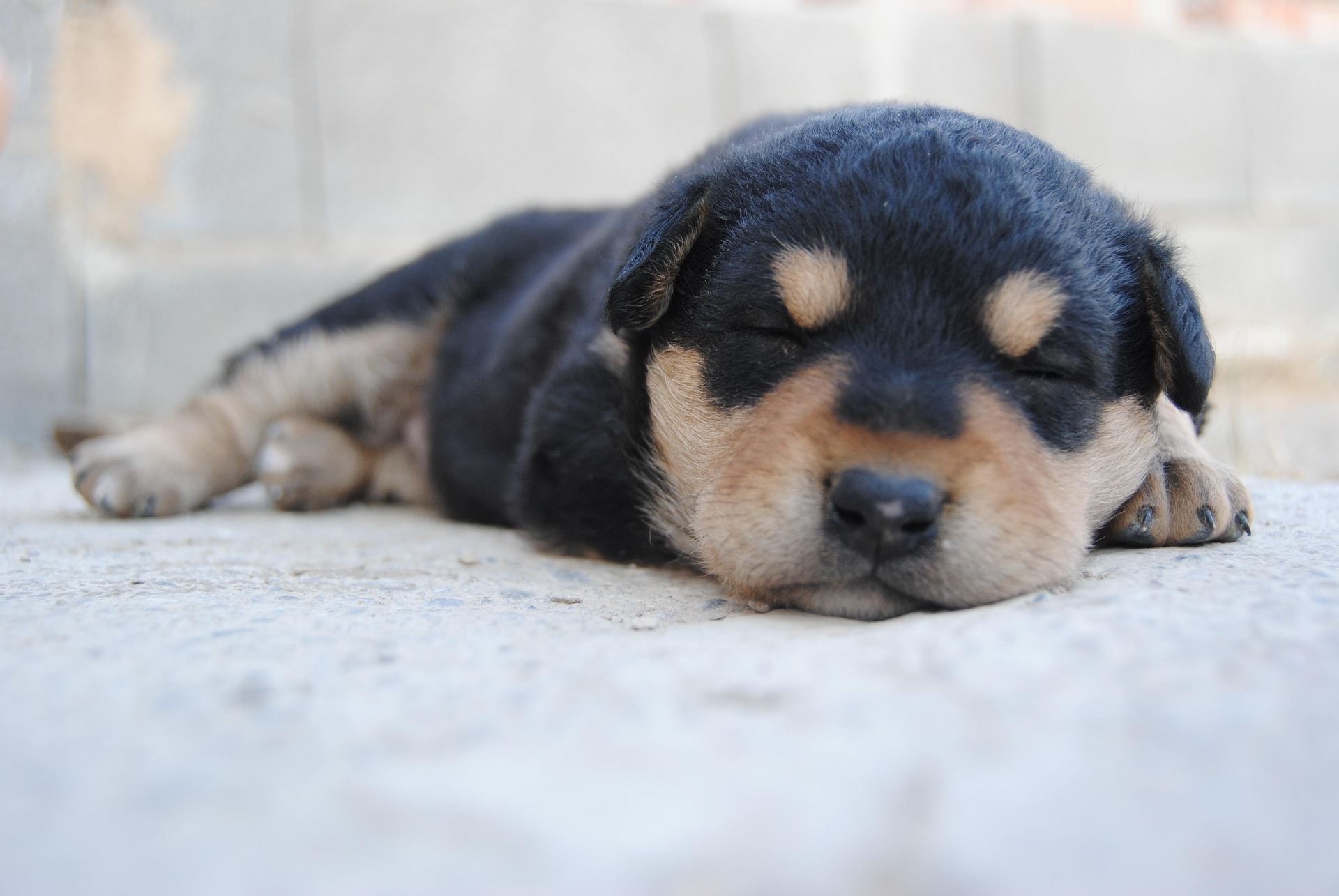
It is a deeply startling and terrifying moment for any new pet parent: you walk over to your puppy’s crate or bed while they are taking a nap, and you notice that their eyes are wide open or half-unzipped while they are completely unconscious. You can see their glassy eyeballs rolled back into their skull, exposing a white or pinkish membrane, while their whiskers twitch, their paws pad the air, and their jaw trembles rhythmically. Watching your fragile companion lie completely motionless with their eyes staring blankly into space can cause an immediate wave of intense panic and helplessness. You might instantly worry that your puppy has suffered a sudden fatal aneurysm, a catastrophic neurological seizure, a toxic chemical reaction, or that they have passed away silently in their sleep. Fortunately, while discovering a puppy sleeping with their eyes open requires your careful evaluation, this physical phenomenon is an incredibly common, safe biological occurrence deeply rooted in specialized animal anatomy and natural sleep cycles. Because a puppy’s central nervous system is maturing rapidly and their eye protection structures operate completely differently than humans, learning to decode these sleeping patterns is the secret to protecting your pet’s optical health. This guide breaks down the real scientific reasons behind why puppies sleep with their eyes open, how their third eyelid shields their vision, and exactly how to tell the difference between a normal deep dream and a true neurological medical emergency.
The Top 4 Practical Reasons Why Puppies Sleep With Their Eyes Open
Veterinary ophthalmologists and animal sleep researchers identify several key physical and evolutionary factors that cause a puppy’s eyelids to remain open during rest:
- The Natural Phenomenon of Lagophthalmos: By far the most common biological reason for this occurrence is a safe anatomical condition known as lagophthalmos, which simply means the physical inability to close the eyelids completely during sleep. In the canine world, this is heavily influenced by facial bone structure and genetics. Flat-faced, brachycephalic breeds—such as Pugs, French Bulldogs, Boston Terriers, and Shih Tzus—possess naturally shallow eye sockets and large, prominent eyeballs, meaning their eyelids must stretch incredibly far to cover the surface. When their facial muscles completely relax during deep sleep, the eyelids naturally slip backward and separate, leaving a large portion of the eye exposed to the air.
- The Protective Function of the Nictitating Membrane: When humans look at a puppy sleeping with their eyes open, they are often horrified to see a thick, white or pinkish film covering the eyeball instead of a normal pupil. This is not a sign of blindness or death; it is your puppy’s fully functional third eyelid, known scientifically as the nictitating membrane. Unlike humans who only possess two eyelids, dogs possess this specialized third tracking shutter hidden in the inner corner of their eyes. When a puppy falls into a deep sleep, their eyeballs naturally roll backward into the socket, which automatically triggers the nictitating membrane to slide horizontally across the eye. This membrane sweeps away dust particles, lubricates the cornea with fresh tears, and blocks out ambient room light, allowing the puppy to sleep safely even if their outer eyelids remain completely open. [1, 2]
- High-Octane REM Dream Cycles and Muscle Paralyzation: Puppies operate on a rapid metabolic timeline and spend a massive portion of their daily sleep schedule inside the Rapid Eye Movement phase, which is the exact zone where vivid dreaming occurs. During an active REM cycle, a specialized area of the puppy’s brainstem called the pons sends signals to temporarily paralyze their major muscle groups so they do not physically run around the room acting out their dreams. However, the microscopic muscles controlling the eyelids, whiskers, and paw pads frequently escape this paralyzation loop. As your puppy dreams about chasing crickets, tracking a ball, or playing in the yard, their eyes will rapidly dart back and forth, forcing the relaxed outer eyelids to flutter open and expose the moving eyeballs beneath.
- Ancestral Prey Tracking and Vigilance Mechanics: Before dogs were domesticated into companion pets sleeping inside our homes, their wild canine ancestors had to survive harsh outdoor environments filled with apex predators. Sleeping in a state of absolute, closed-eye darkness left an animal highly vulnerable to a surprise ambush. Evolutionary biologists note that sleeping with the eyelids half-open is a leftover survival mechanism. This layout allows small amounts of ambient light and sudden moving shadows to hit the puppy’s retina even while they are asleep, sending an instant survival signal to their subconscious brain to wake them up immediately if a predator approaches their nesting space.
How to Safely Assess and Monitor Your Sleeping Puppy
To protect your puppy’s delicate ocular health and ensure their brain is resting safely, you must handle the situation calmly using this systematic approach:
- Utilize the Gentle Air Blow Test: If you discover your puppy sleeping with their eyes open and you need immediate reassurance that they are alive and well without violently shocking their nervous system, do not shake them or shout their name. Instead, stand a few inches away from their face and blow a tiny, gentle puff of air directly toward their open eye. If the puppy is simply in a normal, deep REM sleep, their natural survival reflexes will trigger instantly, causing their third eyelid to blink rapidly, their muzzle to twitch, or the puppy to slowly open their eyes and wake up on their own terms.
- Monitor for Proper Corneal Hydration: If your puppy frequently sleeps with their eyelids separated due to their breed’s facial shape, you must inspect the physical texture of their eyes when they wake up. If the eyes look completely bright, clear, and moist, their third eyelid is doing a perfect job of distributing tears. However, if you notice that their eyes look chronically bloodshot, dry, cloudy, or if the puppy constantly rubs their face against the carpet after waking up, the open sleeping position is causing corneal drying. Talk to your vet about using a safe, over-the-counter lubricating pet eye drop or automated nightly gel to protect their vision from chronic chapping.
- Never Wake a Deeply Dreaming Puppy Forcefully: There is an old, vital piece of advice in the pet community: let sleeping dogs lie. If you pull a puppy out of a heavy REM dream cycle by shaking them violently, you will trigger an intense spatial confusion reflex. The puppy’s conscious brain will not instantly register that they are safe inside their home. Trapped in a fight-or-flight panic, even the gentlest puppy can instinctively snap, lung forward, or deliver a painful defensive bite to your hand before they are fully awake. Always call their name softly from a safe distance if you must wake them up.
- When to Seek Emergency Veterinary Care: You must learn to differentiate between a peaceful dream and a true neurological medical crisis. A normal sleeping puppy will display loose, soft muscles, slow breathing, and their eye twitching will be brief and intermittent. However, if your puppy’s body suddenly goes completely rigid and stiff, if their neck arches backward tightly, if they begin paddling their legs violently while foaming at the mouth, or if they completely lose control of their bladder and bowels while staring blankly, they are not dreaming. They are experiencing a major generalized neurological seizure or active toxic poisoning that requires an immediate emergency rush to a veterinary animal hospital for stabilization.
© 2026 bffpup. All Rights Reserved.
Disclaimer: The information on bffpup is for educational and entertainment purposes only. We are not veterinarians, veterinary ophthalmologists, or licensed pet medical professionals. The content on this site is not a substitute for professional veterinary advice, diagnosis, or immediate clinical treatment. Sleeping with the eyes open is generally safe and normal, but permanent pupil dilation, a total lack of a blink reflex when touched, or involuntary muscle spasms accompanied by foaming at the mouth indicate severe neurological emergencies, epilepsy, or toxicity that require immediate professional intervention. bffpup will not be held responsible or liable for any illnesses, setbacks, or actions taken based on the information provided in our articles. Always consult a qualified veterinarian regarding the specific physical health, optical safety, or neurological needs of your canine companion.