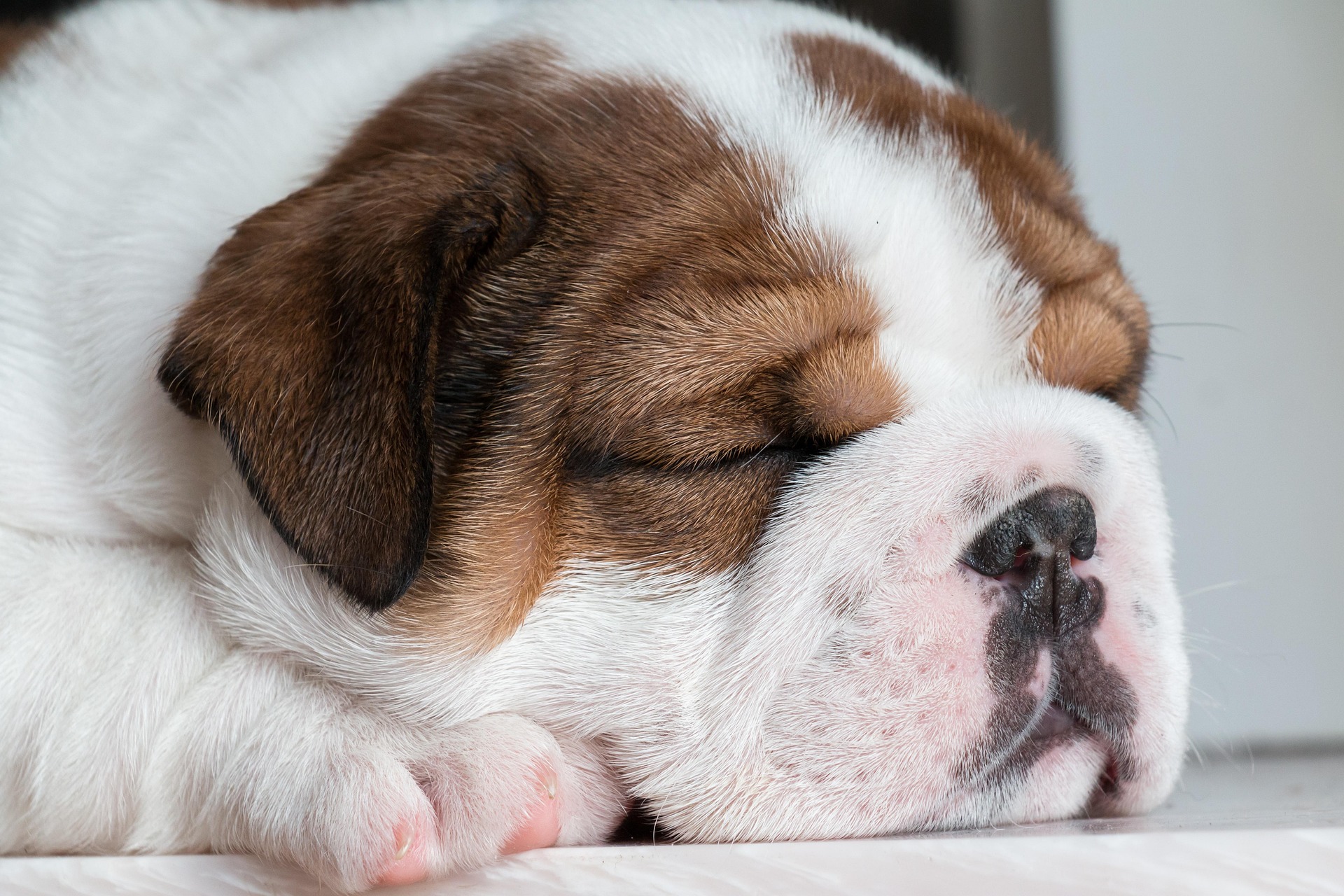
It is a deeply fascinating and heartwarming sight that almost every dog owner has witnessed firsthand: your dog is curled up on their bed fast asleep when suddenly, their paws begin to twitch rhythmically as if they are chasing an invisible rabbit. Moments later, their whiskers tremble, their eyelids flutter, and they let out a series of muffled, quiet barks, whines, or growls into the quiet room.
Watching your pet experience such active physical reactions while deeply asleep can make you wonder exactly what is happening inside their head. You might assume your dog is just having a minor muscle spasm, reacting to a noise in the house, or that they are actively dreaming about their daily adventures with you.
Fortunately, scientific research confirms that dogs do indeed experience vivid dreams. Feline and canine neurological structures are remarkably similar to humans when it comes to sleep processing. Your dog’s brain isn’t just resting; it is actively replaying their daily experiences, practicing their survival movements, and consolidating their memories. This guide breaks down the real biological science behind canine dreaming, how to read their sleep movements, and what your dog is most likely dreaming about.
The Top 4 Scientific Truths Behind Canine Dreams
Veterinary neurologists and sleep researchers identify several distinct biological factors that control how and why your dog dreams:
- Identical Brainwave Patterns and Electrical Activity: The primary proof that dogs dream comes from structural brain monitoring. When researchers hook dogs up to electroencephalogram machines to track their electrical brainwave patterns during rest, the data shows that dogs enter a deep state known as Rapid Eye Movement sleep. During this phase, a dog’s brainwaves look exactly like a human brainwave pattern during a dream, characterized by fast, irregular electrical firing. This proves that their minds are experiencing a highly active mental landscape while their limbs are resting.
- The Structural Function of the Pons Brainstem: Humans and dogs possess a specialized neurological switch in the brainstem called the pons. The primary job of the pons is to paralyze the large muscles of the body during deep sleep. This safety switch prevents you and your dog from physically getting out of bed and acting out your dreams. In puppies and senior dogs, the pons is either underdeveloped or naturally weakening, which is why young puppies and older canines twitch, kick, and whimper far more intensely than healthy adult dogs during a deep dream state.
- The Mathematical Frequency Based on Dog Size: In the canine world, a dog’s physical size completely dictates how often they dream. Small breeds, like Chihuahuas and Toy Poodles, tend to have very short, rapid dream cycles, entering a fresh dream state roughly once every ten minutes, with each dream lasting only a single minute. Conversely, giant breeds, like Great Danes and Mastiffs, enter a dream state much less frequently, experiencing a new dream roughly once every ninety minutes, but their dreams are significantly longer and more sustained, lasting up to five to ten minutes at a time.
- Consolidating the Memories of Their Daily Adventures: Because dogs do not possess abstract human language skills, their brains do not dream about fantasy scenarios, work stress, or complex human concepts. Instead, animal behaviorists confirm that dogs dream about standard canine activities. Their brains use the sleeping hours to process the visual and scent memories of their day, meaning your dog is most likely dreaming about chasing a ball at the park, tracking a neighborhood squirrel along the fence, guarding the front door, or interacting with you.
How to Safely Read Your Dog’s Sleep Positions and Movements
Learning to identify the different stages of your dog’s rest schedule helps you evaluate their deep comfort and physical recovery:
- The Slow-Wave Sleep Phase: This is the very first stage of sleep your dog enters as they doze off. During this phase, the dog’s mind is quiet, their breathing is slow and regular, and their body remains completely still. They can be easily awoken by a quiet footprint or the sound of a food wrapper.
- The Active REM Dream Phase: This phase occurs roughly twenty minutes after a dog falls asleep. Their breathing becomes shallow, rapid, and irregular. You will see their eyes moving rapidly beneath their closed eyelids, paired with dramatic paw paddling, tail wagging, jaw twitching, and quiet vocalizations. This is the exact moment the dream is occurring.
The Golden Safety Rule: Why You Should Never Wake a Dreaming Dog
There is an old, wise saying in the pet community: let sleeping dogs lie. If you see your dog having an intense dream or whimpering, your immediate human instinct might be to shake them awake to comfort them from a potential nightmare. However, violently waking a dog during an active REM cycle is highly dangerous. When a dog is pulled out of a deep dream instantly, their conscious brain does not register where they are. They are trapped in a state of sudden spatial confusion and survival reflex. Even the gentlest dog can instinctively snap, lung forward, or deliver a painful bite to your hand before they fully realize they are safe in their own home. If you must wake them, stand a few feet back and call their name softly until they open their eyes on their own terms.
© 2026 Bffpup. All Rights Reserved.
Disclaimer: The information on PetsFav is for educational and entertainment purposes only. We are not veterinarians, animal behaviorists, or licensed medical professionals. The content on this site is not a substitute for professional veterinary advice, diagnosis, or treatment. A sudden, drastic change in your dog’s daily sleeping positions, or sleep accompanied by violent physical seizures, a total loss of bowel control while asleep, or heavy panting and respiratory distress can indicate advanced neurological disorders or epilepsy. PetsFav will not be held responsible or liable for any actions taken based on the information provided in our articles. Always consult a qualified veterinarian regarding the specific physical health, neurological tracking safety, or medical needs of your canine companion.